

Written by Hazel Secco, CFP®, CDFA®
Estimated reading time: 13 minutes
Table of contents
- The Vesting Schedule: Your Equity’s Timeline
- What Happens to Your Stock Options?
- The Fate of Your RSUs and RSAs
- Employee Stock Purchase Plans (ESPPs) in Layoff Scenarios
- Navigating Your Options During Layoffs
- Tax Implications of Equity Compensation in Layoff Scenarios
- Planning for Future Equity Compensation
- You May Also Like
Taking Control of Your Future After a Job Change
Finding out your job is ending is a heavy moment. If you have been earning company stock or options, you might be worried about what happens to that money. Take a deep breath—you aren’t alone. Whether you call it a layoff, a “reduction in force,” or a career transition, we are here to help you navigate the math so you can stay focused on your future.
In this guide, we’ll walk through how to manage your company stock when you leave a high-level corporate role. We’ll explain the different types of equity, what you get to keep, and what might disappear. Grab a cup of coffee—or even a glass of wine—take a moment to breathe, and let’s tackle this together.
Understanding Equity: Your Stake in the Success
Equity compensation is a popular tool that major companies use to attract and keep top talent. Think of it as a “thank you” from your employer. Instead of just paying you in cash, they give you a stake in the company’s future success. It is like a ticket that could be worth a lot of money if the company does well.
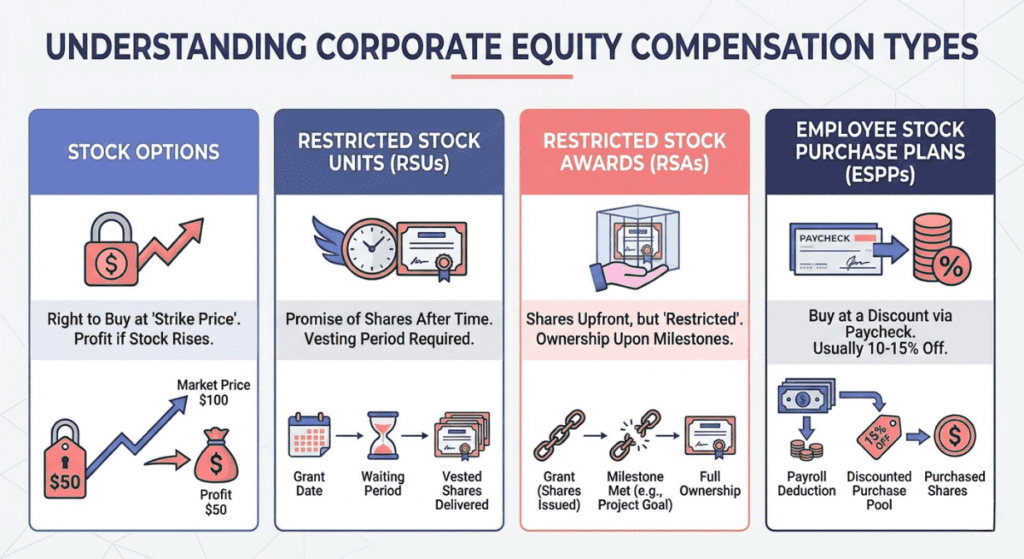
The 4 Common Types of Equity
In the corporate world, you will likely see one (or more) of these four types:
- Stock Options (ISOs & NSOs): These give you the right to buy shares at a set price (the “strike price”). If the stock price goes up, you buy them at the old, lower price and keep the profit.
- Restricted Stock Units (RSUs): These are promises to give you actual shares of stock after you work for the company for a certain amount of time.
- Restricted Stock Awards (RSAs): You get these shares upfront, but they aren’t fully yours until you hit certain milestones.
- Employee Stock Purchase Plans (ESPPs): These plans let you use your paycheck to buy company stock at a discount, usually 10% to 15% off the market price.
Each type of equity compensation operates differently, and those differences matter most when employment changes. Knowing the details of your equity allows you to make clear, strategic decisions about your next move.
The Vesting Schedule: Your Equity’s Timeline
Let’s talk about vesting. Think of it as the timeline that determines when your equity truly becomes yours. The longer you stay with the company, the more ownership you earn.
Most large corporations—from tech giants to pharmaceutical leaders—follow a four-year vesting schedule.
Another common vesting schedule is a four-year vesting schedule with a one-year cliff. In plain terms, this means you generally need to remain employed for at least one full year before any equity vests. After that initial cliff, your remaining shares typically vest gradually, often quarterly, over the following three years.
Understanding your vesting schedule is especially important if you’re facing a potential layoff or job transition. Knowing exactly what has vested (and what hasn’t) helps you make informed decisions about your next steps—whether that’s evaluating what you’ll keep, timing a transition, or negotiating aspects of your severance package.
What Happens to Your Equity Compensation During Layoffs?
When you hear the tough news about layoffs, it’s normal to feel a whirlwind of emotions—stress, uncertainty, and a lot of questions. One big concern for corporate executives and high-net-worth professionals is: “What happens to all those company shares I’ve been earning?”
Don’t worry. We’re here to walk you through it step-by-step, helping you move from uncertainty to a clear financial plan.
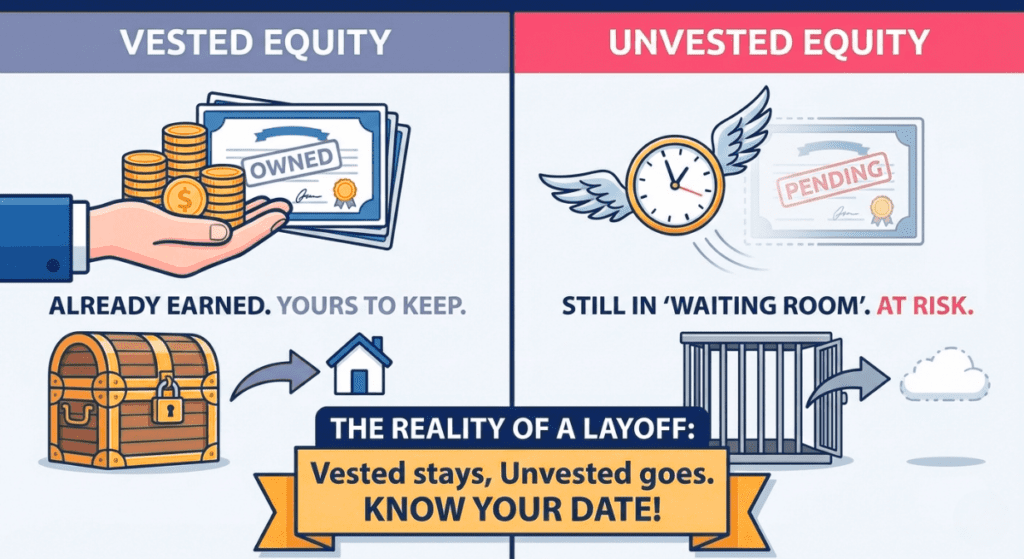
Vested vs. Unvested Equity: What’s the Difference?
Let’s start by clearing up the basics.
- Vested Equity: This is the portion of your shares that you’ve already “earned.” You have the legal right to keep or exercise these shares.
- Unvested Equity: This is still in the “waiting room.” You haven’t fully earned it yet based on your company’s timeline.
The Reality of a Layoff: In most corporate scenarios, you keep your vested equity as a reward for your time and commitment. However, unvested equity typically disappears the moment your employment ends. This is why knowing your next “vesting date” is a critical part of any severance negotiation.
What Happens to Your Stock Options?
Got stock options? Things can get a little tricky here, so let’s break it down:
- Vested Options: Once you’re no longer with the company, you’ll usually have a set period—known as the post-termination exercise window—to decide whether you want to exercise these options. It’s a time-sensitive decision, so make sure to check how long you have.
- Unvested Options: Unfortunately, these tend to vanish when you leave, no matter the reason for your departure. It’s not the best news, but it’s important to know what to expect.
- Exercise Window: Most companies give you around 90 days to exercise any vested options once you leave. Some forward-thinking biotech firms are extending this period, but that’s still more of the exception than the rule.
Exercising your options can come with tax consequences, so it’s a smart move to chat with a tax professional before making any decisions. Better to be prepared than to face a surprise tax bill!
The Fate of Your RSUs and RSAs
If you’ve got Restricted Stock Units (RSUs) or Restricted Stock Awards (RSAs), here’s how it usually plays out:
- Vested RSUs/RSAs: The good news? These are typically yours to keep. Once they’ve vested, they turn into actual shares of company stock, and you get to hold onto them, even if you’re no longer with the company.
- Unvested RSUs/RSAs: Unfortunately, unvested RSUs and RSAs usually disappear if your employment ends. It’s not ideal, but it’s better to know upfront so you can plan accordingly.
- Tax Considerations: Just a heads-up—when your RSUs or RSAs vest, they’re treated as ordinary income for tax purposes, even if you haven’t sold the shares yet. It’s worth keeping this in mind (and maybe even chatting with a tax pro) to avoid any surprises.
Employee Stock Purchase Plans (ESPPs) in Layoff Scenarios
If you’ve been part of an ESPP, here’s how things usually shake out if you’re facing a layoff:
- Contributions: Any money you’ve set aside but hasn’t yet been used to buy shares will typically be refunded to you. So, you won’t lose out on those savings.
- Purchased Shares: The shares you’ve already bought are yours, no matter what happens with your job. They remain yours, even if your employment ends.
- Future Purchases: Your ESPP participation ends when your employment does. That means no more future stock purchases, but at least you can hold on to what you’ve already got.
It’s a lot to process, but knowing what to expect can make things a little easier.

Navigating Your Options During Layoffs
Going through a layoff is tough, no doubt about it. But knowing your options can make a hard situation feel a little more manageable. Let’s walk through some strategies for handling your equity compensation during this time, so you can feel more in control of what comes next.
Understanding the Value of Your Equity
Before you make any big moves, it’s important to know what your equity is really worth. Here’s a simple way to break it down:
- Check the Current Stock Price: If your company is public, this should be easy to find. For private companies, you might need to go with the most recent valuation you have.
- Calculate Your Potential Gain: Take the current stock price, subtract your strike price, and multiply that by how many vested shares or options you have. That’ll give you an idea of what you’re working with.
- Consider Future Potential: While nobody has a crystal ball, it’s worth thinking about the company’s future. Could the stock price rise? This can help you decide whether to hold or exercise your options.
- Factor in Tax Implications: Don’t forget about taxes! Exercising options or selling shares can come with tax consequences, so it’s not just about the gross value but what you’ll actually take home after taxes.
Being clear on these things can help you make more informed decisions about your equity.
To Exercise or Not to Exercise: That is the Question
If you’ve got vested stock options, it’s time to figure out whether to exercise them or not. Here are a few things to keep in mind as you decide:
- Your Financial Situation: Do you have the cash to exercise your options and cover any taxes that come with it? It’s important to make sure this won’t put a strain on your finances.
- Company Outlook: How do you feel about where the company is headed? If it’s a private company, this is especially important, since it might be harder to sell your shares down the road.
- Diversification: If you exercise, will too much of your wealth be tied up in this one stock? It’s a good idea to spread things out and avoid putting all your eggs in one basket.
- Time Pressure: Don’t forget the 90-day post-termination exercise window. Do you feel confident making a decision within that timeframe? It’s a lot to think about, but having a plan can help.
Taking a moment to consider these factors can help you feel more confident in making the right choice for your situation.
Negotiating Your Departure Package
If you’re facing a layoff, it’s okay to advocate for yourself and negotiate. Here are a few things you might want to ask for:
- Extended Exercise Window: Some companies might be open to giving you more time to exercise your stock options, extending that 90-day window. It’s definitely worth asking.
- Accelerated Vesting: You could negotiate for some of your unvested equity to vest when you leave. It’s not always guaranteed, but sometimes companies will consider it, especially for valued employees.
- Cash in Lieu of Equity: If exercising your options isn’t financially realistic, you might be able to negotiate a cash payout based on the value of your vested equity.
- Continued Vesting: If you’re close to hitting a major vesting milestone, see if you can negotiate a later termination date to reach it.
Remember, the worst they can say is no, but you might be surprised at what they’re willing to offer—especially if you’ve been a dedicated team member. It never hurts to ask!
Tax Implications of Equity Compensation in Layoff Scenarios
Equity decisions during a layoff often come with unexpected tax consequences, especially when income changes mid-year. Understanding how each equity type is taxed allows you to avoid costly surprises and plan proactively.
Understanding the Tax Treatment of Different Equity Types
Each type of equity compensation has its own tax rules. Here’s a quick breakdown to help you understand:
- Non-Qualified Stock Options (NSOs): You’ll owe taxes when you exercise the options, based on the difference between the strike price and the market value at that time.
- Incentive Stock Options (ISOs): ISOs can offer tax benefits if you hold onto them long enough. But watch out—they can also trigger the Alternative Minimum Tax (AMT) when exercised.
- Restricted Stock Units (RSUs): These are usually treated as ordinary income when they vest, meaning taxes are due at that time.
- Employee Stock Purchase Plan (ESPP): How these are taxed depends on whether you sell the shares as a qualifying or non-qualifying disposition.
It’s always a good idea to get some guidance on your specific situation to make sure you’re handling everything right.
The Impact of Layoffs on Tax Obligations
Losing your job can throw your tax situation for a loop, but understanding the details can help you stay on top of things:
- Income Fluctuation: A sudden drop in income could put you in a lower tax bracket, which might lessen the tax hit when exercising options.
- AMT Considerations: If you’re dealing with ISOs, your lower income might help you avoid or reduce any Alternative Minimum Tax (AMT) you’d otherwise owe.
- Withholding Issues: After leaving the company, your employer may not withhold taxes if you exercise options, meaning you could be on the hook for estimated tax payments instead.
It’s a lot to juggle, but understanding these potential impacts can help you navigate things more smoothly. If you’re feeling unsure, this might be a good time to check in with a tax advisor or a financial advisor who specializes in tax planning for executives and high earners.
Strategies for Minimizing Tax Impact
Everyone’s tax situation is a bit different, but here are a few strategies that might help lighten the tax load:
- Spread Out Exercises: If you can, consider exercising stock options over several years. This could help spread out the tax hit and keep you in a lower tax bracket.
- Qualifying Disposition for ISOs: Holding your ISO shares for at least two years from the grant date and one year from the exercise date can qualify you for more favorable long-term capital gains tax rates.
- Tax-Loss Harvesting: If you’ve got capital losses elsewhere in your portfolio, you can use them to offset any gains from selling your company stock.
- 83(b) Election: For certain types of restricted stock, opting for an 83(b) election can be beneficial by paying taxes upfront, though it’s not without its risks.
Tax rules can be complicated and always seem to be changing, so it’s a smart move to consult with a tax pro who knows the ins and outs of equity compensation. They’ll help make sure you’re making the best decisions for your situation!
Planning for Future Equity Compensation
While dealing with the aftermath of a layoff, it’s also important to think about how you’ll approach equity compensation in your next role. Let’s look at some strategies for making the most of future equity opportunities.
Negotiating Equity in Your Next Role
When you land your next role, keep a few things in mind to get the most out of your equity compensation:
- Understand the Equity Package: Make sure you know exactly what’s being offered. Ask about the type of equity (stock options, RSUs, etc.), how long it takes to vest, and any performance conditions attached.
- Look Beyond the Numbers: A bigger number of stock options might not always be better than fewer RSUs. It’s about understanding the value and risk involved with each type of equity.
- Consider the Company’s Stage: Equity in a startup can offer huge potential, but it also comes with more risk. In a more established company, there’s often less risk, but maybe less potential for big gains too.
- Negotiate for Accelerated Vesting: If you can, try to negotiate accelerated vesting in case of a future layoff or company sale. It could be a safety net that gives you more security down the road.
This way, you’ll feel confident that your next offer is working for you, not just now, but in the future too.
Balancing Equity and Cash Compensation
Equity can be a great opportunity, but it’s important to keep things balanced:
- Make Sure You Have a Solid Base Salary: Equity is exciting, but don’t trade off too much of your cash salary for the potential of future gains. You need to cover your day-to-day expenses comfortably.
- Know Your Risk Tolerance: If you’re not someone who loves taking risks, you might prefer a higher base salary and less equity. It’s all about finding what makes you feel secure.
- Consider Where You Are in Your Career: Early in your career, you might be willing to take more risks with equity-heavy offers, but as you get further along, stability might be more important.
- Plan for Different Outcomes: Think about what your compensation package looks like in different scenarios—whether the company takes off, doesn’t do as well, or lands somewhere in the middle.
The key is finding a balance that works for your financial stability and your comfort with risk.
Final Thoughts
Equity compensation during a layoff can feel overwhelming, but it doesn’t have to derail your long-term plan. With the right information and thoughtful planning, this moment can become an opportunity to realign your finances with the life you want to build next.
Equity is just one piece of the puzzle. The real goal is flexibility, clarity, and confidence — so your money supports your choices, not the other way around.
If you’re navigating equity decisions and want a clear, strategic perspective, a short conversation can help you understand your options and avoid costly missteps.
Schedule a 15-minute call to review your equity and next steps — and make sure your hard-earned money continues working for you.