


Written by Hazel Secco, CFP®, CDFA®
Estimated reading time: 12 minutes
Key Points:
- A new job offer is more than a salary; it’s a chance to align your career, compensation, and lifestyle with the future you want to build.
- To make a confident decision, evaluate the full package including equity, benefits, growth opportunities, taxes, and day-to-day impact.
- If anything feels unclear, take your time, ask questions, and lean on trusted professionals to help you protect your goals and your peace of mind.
Table of contents
- Start with the Full Financial Picture
- Dig Into the Equity Compensation
- Benefits Matter More Than You Think
- Think Long-Term Career Growth
- Lifestyle Check: Will This Role Support the Life You Want?
- Consider the Tax Impact
- Read the New Job Offer Carefully, Then Read It Again
- New Job Offer Financial Checklist
- Align Financial Solutions Can Help You Move Forward with Confidence
- Related Posts
A new job offer lands in your inbox. Cue the butterflies, the mental pro/con list, maybe even a celebratory glass of wine.
It’s exciting, and it should be. But before you hit “accept,” it’s worth pausing to consider what that new role really means for your financial life.
If you’re a woman in leadership, especially in fast-paced fields like tech or pharma, a career move is rarely just about a new title or a bigger paycheck. You’ve put in the work to get where you are, and your next step should do more than pad your résumé. It should reflect your values, help you build long-term wealth, and move you closer to the life you want.
Remember, it’s not just about climbing higher. (I know it’s not always easy to remember, and believe me, I struggle with it too. But that’s exactly why I’m here: to support you and be your advocate.) It’s about making sure you’re headed in the right direction—and that’s what matters most!
Here’s a straightforward checklist to help you evaluate your next job offer and make a clear, confident decision about what’s right for your future. Ready?
Start with the Full Financial Picture
When it comes to a new job offer, salary is just one piece of the puzzle. It matters, of course, but so do all the other elements that make up your total compensation.
Take a close look at everything that’s being offered. Is there a signing bonus? Annual performance bonuses?
How often are raises given, and are they based on your performance, your time in the role, or broader company goals that may be out of your control?
It’s easy to be drawn to a higher base salary, but if long-term growth is limited or bonuses are inconsistent, the offer might not be as strong as it looks. As you evaluate your offer, focus on the full picture, not just the headline number.
A quick note on salary:
While it’s only one part of the overall package, it still matters. If the offer doesn’t reflect your experience or the value you bring, don’t hesitate to negotiate.
In one recent study, those who negotiated received an average salary increase of 18.83%. But here’s the disappointing part: 76% of those who negotiated were men, while only 24% were women. Make sure you ask for what you’re worth.
Dig Into the Equity Compensation
For women leaders in tech and pharma, equity can be one of the most attractive parts of a new job offer. It’s a powerful way to build long-term wealth, but it’s also one of the most confusing, even with a finance degree.
Whether you’re being offered RSUs, stock options, or access to an Employee Stock Purchase Plan (ESPP), it’s important to understand what you’re getting, when you’ll get it, and what you might be leaving behind.
When changing roles, a key concept to understand is “vesting.” This basically means earning ownership over time. Once your shares vest, they’re yours to keep. Until that point, they still belong to your employer.
For example, if your current equity is scheduled to vest in six months, leaving now could mean leaving real money on the table. A new offer might include a larger grant, but if it vests over four years with no acceleration, it may be a long time before you actually benefit.
This can have a real impact, especially if you’re working toward near-term goals like buying a home or covering tuition. Timing matters, and it’s worth factoring this into your decision.
Equity compensation can get complicated, and don’t worry—you don’t need to become an expert overnight. What matters most is having a solid understanding of the basics and seeking guidance when you need it.
Benefits Matter More Than You Think
Your paycheck may cover the bills, but your benefits often shape the day-to-day quality of your life. When you’re weighing a job offer, don’t just look at the cash and equity. Take a close look at what else the company provides.
If it helps, create a simple chart or checklist to compare benefits packages, focusing on:
- Health insurance. Compare monthly premiums, deductibles, and out-of-pocket maximums. If you have a partner on your plan or cover dependents, don’t forget to factor that in too.
- Mental health and fertility benefits. If these are priorities for you, check whether the plan includes coverage for therapy, mental health apps or coaching, and fertility treatments or family planning support. These benefits can be deeply personal and often vary widely from one employer to another.
- Retirement and savings plans. Does the company offer a 401(k), and if so, do they provide a matching contribution? Are there other savings options available, like a Health Savings Account (HSA), Flexible Spending Account (FSA), or Employee Stock Purchase Plan (ESPP)? These programs can play a key role in your long-term financial strategy.
- Time off and flexibility. How much paid time off is offered? Is there a parental leave policy? Are there options for hybrid or remote work?
- Professional and lifestyle perks. Consider extras like learning and development stipends, wellness reimbursements, gym memberships, or meal programs. These benefits may seem small, but they can add meaningful value to your daily life and support a better work-life balance.
Of course, not every role change involves switching companies. If you’re moving up internally, your core benefits may stay the same, though leadership positions sometimes come with enhanced perks. Either way, it’s worth reviewing any changes so you can take full advantage of what’s available.
Think Long-Term Career Growth
A new job isn’t just about what’s next. It’s part of a bigger vision for your life and career. That can feel overwhelming at times, but it’s also an opportunity to choose what truly aligns with your goals.
As you consider your options, take a moment to ask yourself:
- Does this opportunity help you grow into the next version of yourself, both professionally and personally?
- Can you see yourself learning, stretching, and building something meaningful here?
- Would your talent be appreciated in a way that fulfills you emotionally and financially?
Also take a look at how the company supports women in leadership. Are there people you admire? Are mentorship and advancement part of the culture, or does it feel like a place where you’d have to constantly fight for a seat at the table?
Don’t overlook stability, either. That great offer loses its shine quickly if the company is in turmoil. Take a little time to do your research. Check the headlines. Talk to people who’ve worked there. Trust your instincts. Your inner wisdom often has your back, and you don’t want to ignore that.
You’ve earned the right to be thoughtful about this. Remember, you’re not just choosing a paycheck. You’re choosing the environment where you’ll spend your time, energy, and talent.
Lifestyle Check: Will This Role Support the Life You Want?
A job can look amazing on paper, but don’t forget to consider how it will feel once you’re living it day to day.
- Will your commute eat up more of your time?
- Are there heavy travel demands?
- Personally, this is a deal breaker for our household. We have young kids, and I know how hard it can be when a parent isn’t around. We do our best to make sure that’s not a regular thing in our home. Talk it through with your spouse or partner and consider whether the new role might completely disrupt your family’s rhythm or way of life.
- Will you be expected to respond to messages after hours or on weekends?
- What’s the unspoken culture when it comes to taking time off or working from home?
If you’re balancing caregiving, managing a household, or simply protecting your headspace, these details matter. Your energy and well-being are invaluable. The right role won’t just fit your résumé. It will fit your real life, too.
Consider the Tax Impact
Taxes might not be the most exciting part of a job offer, and they’re often the most overlooked. However, they can have a real effect on your financial life, so they’re worth paying attention to.
In many cases, paying more in taxes simply means you’re earning more. And that’s a good thing.
But as your income increases, your tax situation often becomes more complicated. When bonuses, equity, or even a potential move to another state are on the table, it’s important to understand how these pieces work so you can make informed choices about the rest of your financial life. For example:
- A higher salary could push you into a new tax bracket, which may affect what you owe when it’s time to file.
- Bonuses and equity grants can impact how much is withheld from your paycheck, so it may be worth adjusting your withholding to avoid surprises later on.
- If your new job means relocating, compare state income taxes. Moving from a state with no income tax to one with a high tax rate can have a noticeable impact on your take-home pay.
Taxes aren’t a dealbreaker, but having a clear understanding of what you’re stepping into can help you plan ahead and avoid missteps. If you feel unsure, this is a great time to bring in a financial professional who can help you sort through the details.
Read the New Job Offer Carefully, Then Read It Again
An offer letter might feel like a formality, especially after a great interview process, but don’t treat it as a quick check-the-box moment. The fine print matters, and it’s where potential red flags can hide.
Be on the lookout for clauses that could affect your freedom to make future moves. For instance, a non-compete might limit where you can work next, while a non-solicit could prevent you from bringing your team along if you change companies down the road.
Intellectual property language can also get complicated. This is important if you have a side project or hope to build something of your own in the future.
If anything feels unclear or overly restrictive, don’t hesitate to ask questions and get the clarity you need. Taking the time to review your offer with a legal or financial professional can protect your interests and help you make a decision that supports both your current priorities and your long-term goals.
Again, don’t hesitate to ask questions when you feel unsure. The saying “it’s better safe than sorry” 100% applies here.

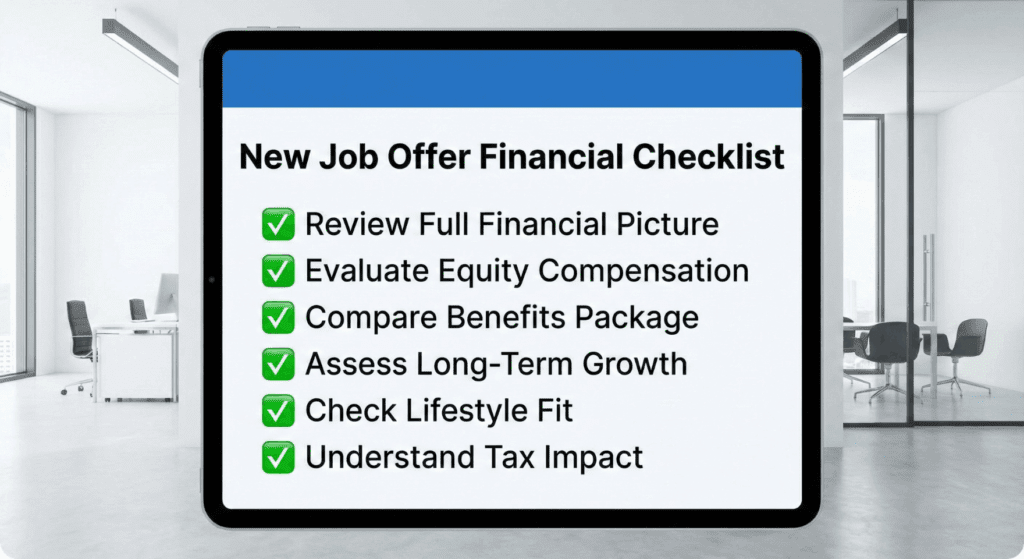
New Job Offer Financial Checklist
✅ Review the full financial picture
- Compare base salary, signing bonuses, and performance incentives
- Understand how and when raises are awarded
- Don’t forget to negotiate if the offer doesn’t reflect your value
- This is something I get especially fired up about when talking with clients: you deserve to be paid what you’re worth. Don’t shy away from voicing your expectations. If they don’t know what you bring to the table or what you’re looking for, it’s hard to have an open and honest conversation.
✅ Evaluate the equity compensation
- Know what type of equity is being offered (e.g., RSUs, PSUs, stock options, ESPP)
- If a sign-on bonus is part of the offer, make sure you understand its vesting schedule—it’s often different from your regular equity vesting.
- If they offer Performance Stock Units (PSUs), ask how often they’re actually distributed. In some cases, distribution is rare, especially if it’s entirely at the manager’s discretion or if the team doesn’t have much equity allocated to begin with.
- Understand the vesting schedule and what you’re walking away from
- When negotiating your offer, it’s absolutely okay to strategically bring up both your vested and unvested stock compensation. It’s not about being intimidating; it’s about ensuring both sides understand what’s on the table and what you’d be walking away from, realistically.
- Get support if the details feel unclear or overwhelming
✅ Compare the benefits
- Health insurance: premiums, deductibles, and dependent coverage, HSA, FSA
- Retirement benefits: 401(k), Roth 401(k), Deferred Compensation, Pension
- Paid time off, parental leave, and remote or flexible work options
- Professional development and lifestyle perks such as legal support benefits
✅ Assess long-term growth potential
- Look at opportunities for mentorship, advancement, and leadership support
- Evaluate company stability and culture
✅ Check lifestyle fit
- Think about how the role will impact your day-to-day energy and responsibilities
- Consider commute time, travel expectations, and work-hour demands. (This is something I’ve seen more often lately. Employers label roles as ‘remote’ but still expect employees to come into the office 2–3 times a week. It’s not necessarily a bad thing, but it’s important to understand their long-term plans so you can make an informed decision.)
✅ Understand the tax impact
- A higher salary may push you into a new tax bracket. (FYI, this isn’t necessarily a bad thing. We just want to be intentional about the decisions we make around it.)
- Bonuses and equity can affect your withholding
- If you’re moving states, compare income tax rates and plan accordingly
✅ Read the new job offer carefully
- Watch for non-compete, non-solicit, or intellectual property clauses
- Make sure you understand how the terms could affect your future options
Align Financial Solutions Can Help You Move Forward with Confidence
Spreadsheets and salary comparisons can help you analyze a job offer, but they can’t answer the most important question: Does this new job offer support the life you want to build?
The right role should reflect your values, challenge you in meaningful ways, and leave room for what matters most: your family, your health, your time, and your sense of purpose.
You don’t need to have all the answers right away. But you do owe it to yourself to make a decision that feels right, not one that’s driven by pressure or outside expectations.
Trust your instincts. Ask the hard questions. And remember that it’s okay to walk away from an offer that doesn’t align with what you truly want.
If you’re looking for personalized guidance on the financial side of your career move, Align Financial Solutions is here to support you. We help women leaders make thoughtful, informed decisions that simplify their finances and create a life where work is optional and freedom is intentional.
Ready to take the next step? Book a 15-minute Align Call to get started and see if we’re the right guide for your financial journey.